
Princeton University
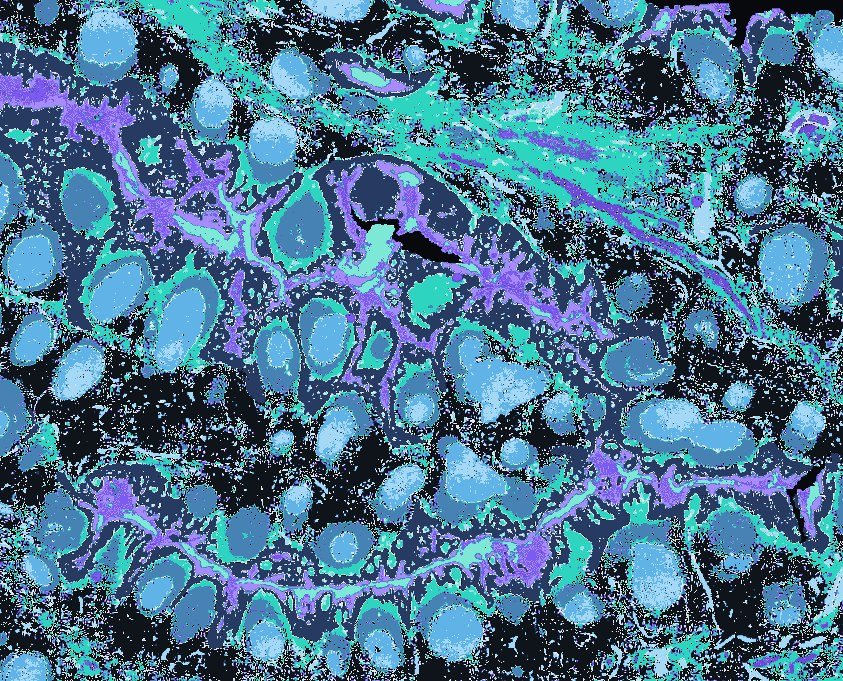
I lead development of cna-maste, open-source software for the detection of copy-number aberrations — gains and losses of DNA due to cancerous tumor growth — in high-resolution spatial transcriptomics. Visium HD by 10x Genomics and StrataMap by Illumina are leading protocols that map gene expression across a tissue slice.
By exploiting sparsity, graph-cut optimization, JAX and a carefully chosen inductive bias, cna-maste improves sensitivity and recall by ~20% over existing methods, and scales inference to ~100K pixels in minutes — more than 20× the size of current datasets.
The method is validated on simulations and on an ovarian cancer sample, and a first-author manuscript has been submitted.
biomodal
At biomodal, a Cambridge genomics startup, I was a core developer of the flagship allele-specific methylation software, which measures methylation differences between the two parental copies of each gene. I helped take it from prototype to a commercial product used by customers, covering read pre-processing and quality control, statistical calling, analysis and reporting.
I led analysis of protocol performance, biological validation and experimental design, with results presented at leading international genomics conferences (AGBT, Biology of Genomes), and represented biomodal at the Seqera (Nextflow) Summit.
I also built and managed a scalable, reproducible Nextflow pipeline on GCP with Docker to classify colorectal cancer from epigenetic sequencing of a large patient cohort; that work is submitted to PNAS.
Durham University
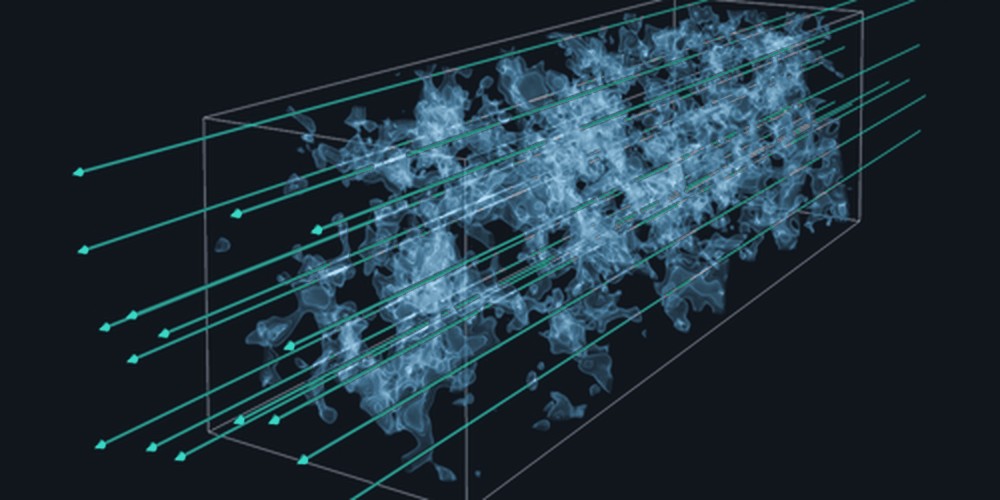
At Durham I designed and built the core inference pipeline for the luminosity function of the DESI Bright Galaxy Survey — how many galaxies exist at each brightness in the local Universe — developing optimal statistical estimators that run on high-performance computing for more than 10 million galaxies.
The result is the most precise measurement to date: it reaches unprecedentedly faint galaxies, with much smaller errors than the previous benchmark (GAMA), and is published in MNRAS (2026).
Lawrence Berkeley National Lab
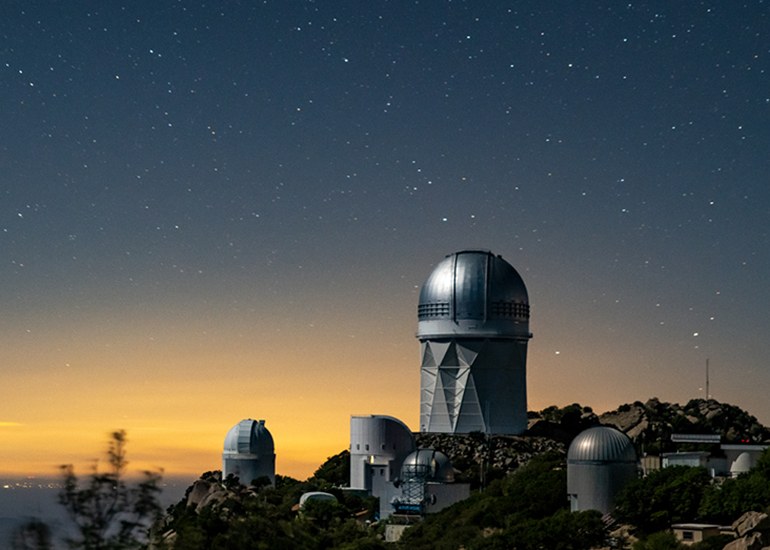
At Berkeley Lab I co-led the Bright Galaxy Survey team for the $70M DESI experiment, owning its science goals, survey design and software, which had to meet strict Department of Energy performance requirements.
I developed statistical estimators and target-selection algorithms that maximize survey efficiency; they run in production on every observation and underpin the survey’s downstream science (Hahn et al. 2022; Ruiz-Macias et al. 2020; Myers et al. 2023).
I also led the science case for a next-generation high-redshift survey — simulations, forecasts and comparisons of competing instruments — which was incorporated as a key component of the five-year DESI-II extension. I was awarded DESI “Builder” status for critical contributions to the survey.

University of Edinburgh
For my PhD I designed a calibration method for large-scale parameter inference with galaxy surveys that runs 1,000× faster while improving accuracy; it has been adopted as standard by major international collaborations.
I also reduced the ~100,000-galaxy VIPERS survey to summary statistics and used them to measure the cosmic growth rate to ~10% precision, finding it consistent with General Relativity.